Workplace well-being is no longer a luxury. In Dakar, as elsewhere, companies are facing increasingly demanding work environments, fast-paced rhythms, and teams that are expected to remain focused, adaptable, and engaged.
In this context, corporate yoga is emerging as a simple, accessible, and deeply human approach. Far beyond a “wellness activity,” it is becoming a practical tool for stress prevention, emotional balance, and stronger team cohesion.
Returning to the Body to Work Better
Workdays often unfold without real pauses. Meetings, screens, commuting, and constant demands keep both the body and mind under continuous tension.
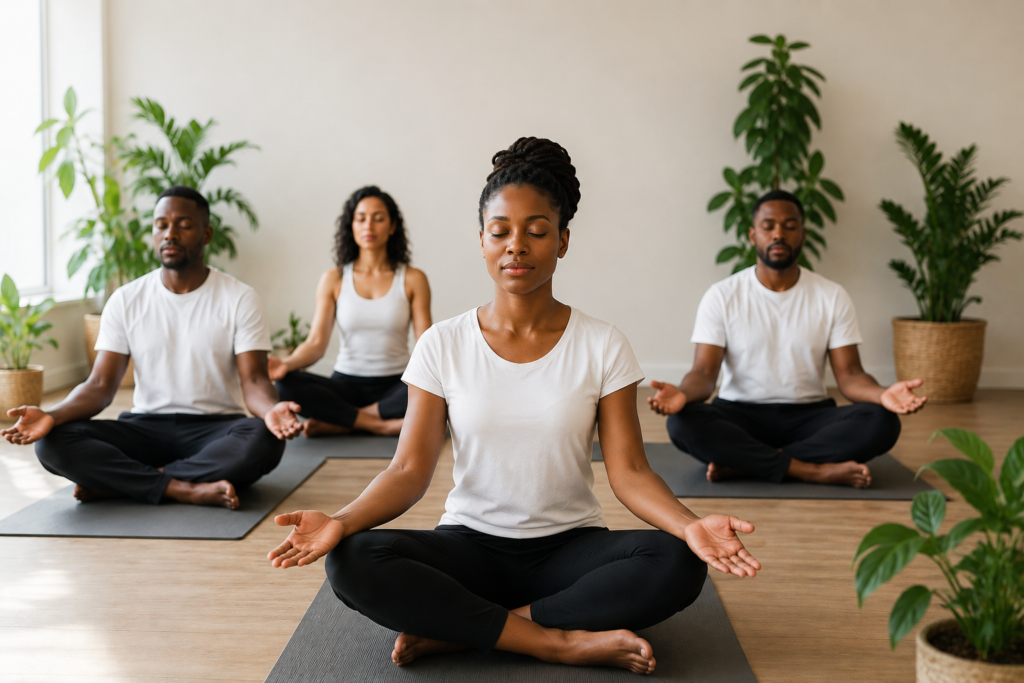
Yoga creates a space to pause and breathe during the day.
A few simple movements, conscious breathing, and moments of mental recentering are often enough to change one’s inner state.
Gradually, employees experience:
- smoother breathing
- improved posture
- greater mental calm
- stronger concentration
- better relational presence and communication
Even in short formats, the effects can be felt quickly. Teams often describe an immediate sense of relief, lightness, and a better ability to manage daily pressure.
Preventing Mental Fatigue and Physical Tension
Chronic stress affects both body and mind.
Fatigue, irritability, back pain, shoulder tension, reduced concentration, and emotional overload have become common in many professional environments.
Corporate yoga helps address these issues preventively.
It supports employees by helping them:
- reduce tension linked to prolonged sitting and posture
- prevent mental fatigue
- improve focus and attention
- support nervous system recovery
- develop greater self-awareness
This approach does not replace effective HR or management practices, but it can become a meaningful support within a broader workplace well-being strategy.
A Positive Impact on Relationships and Team Cohesion
Individual well-being directly influences collective dynamics.
More balanced and relaxed teams tend to communicate with greater clarity, respect, and cooperation.
Yoga also creates a different kind of space within the company:
a moment without hierarchy, immediate performance pressure, or competition.
These shared moments encourage:
- listening
- collaboration
- trust
- quality presence
- stronger and more natural team cohesion
In demanding work environments, these spaces become valuable for maintaining healthier and more balanced professional relationships.
Why This Approach Makes Sense in Dakar
In Dakar, companies often operate in highly dynamic environments.
Work rhythms are intense, responsibilities are multiple, and demands are constant.
Within this fast pace, corporate yoga offers a useful and accessible pause.
It allows teams to slow down briefly, breathe, and regain clarity and presence.
This practice can easily be integrated into:
- workplace well-being initiatives
- HR strategies
- psychosocial risk prevention programs
- team-building events and seminars
- recovery periods after intense workloads
More and more companies are now looking for practical and human-centered approaches to support their employees. Yoga responds to this need with simplicity and depth.
A Practice Accessible to Everyone
One of the key aspects of corporate yoga is accessibility.
It is not about physical performance or a practice reserved for experienced practitioners.
Sessions can be adapted to all levels, ages, and professional environments. A progressive, inclusive, and approachable method encourages participation and long-term engagement.
Often, consistency and the quality of guidance matter more than intensity.
Even a few well-designed sessions can positively transform the atmosphere and quality of presence within a workplace.
Corporate Yoga as a Sustainable Approach
Today, companies are not only looking for high-performing employees.
They are also seeking engaged, resilient teams capable of collaborating and thriving over time.
Corporate yoga supports this more sustainable vision of work.
It places human balance, awareness, and connection back at the center of organizational life.
In Dakar, this approach is gradually becoming recognized as a meaningful lever for prevention, cohesion, and collective well-being.